








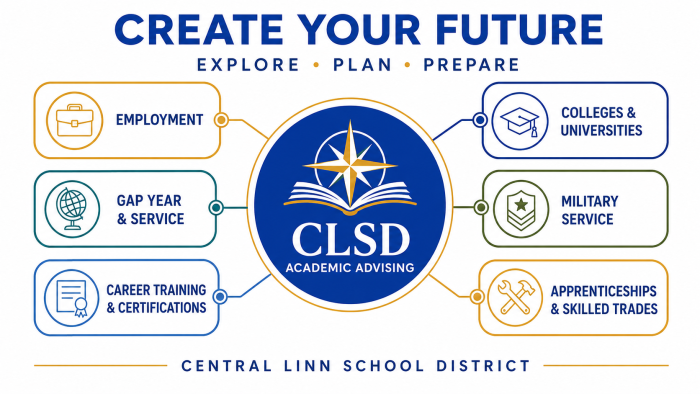
Every student’s future can look different—and there is no single “right” pathway after high school.
Central Linn School District Academic Advising helps students discover their interests, recognize their strengths, explore possibilities, and create an intentional plan for what comes next.
Whether a student wants to enter the workforce, attend college, serve in the military, begin an apprenticeship, earn an industry credential, or take a purposeful gap year, we help connect today’s choices with tomorrow’s opportunities.
Students do not need to have their entire future figured out before meeting with the Academic Advisor. Advising is a place to ask questions, compare options, change direction, and discover possibilities students may not yet know exist.
Planning Beyond High School—and Beyond College
Academic advising at CLSD is not limited to selecting high school classes or applying to college during senior year. We help students look ahead to the complete educational and training pathway their goals may require, including:
- High school courses and graduation requirements;
- College credit earned while attending high school;
- Career and Technical Education programs;
- Industry credentials and professional certifications;
- Apprenticeships and skilled-trades training;
- Community college certificates and associate degrees;
- Transfer pathways from community colleges to universities;
- Bachelor’s degree programs;
- Master’s and doctoral programs;
- Medical, legal, education, and other professional schools;
- Licensure and certification requirements; and
- Continuing education and advanced professional training.
Click here to schedule an in-person meeting.
Click here to schedule a virtual meeting.
Academic Advisor
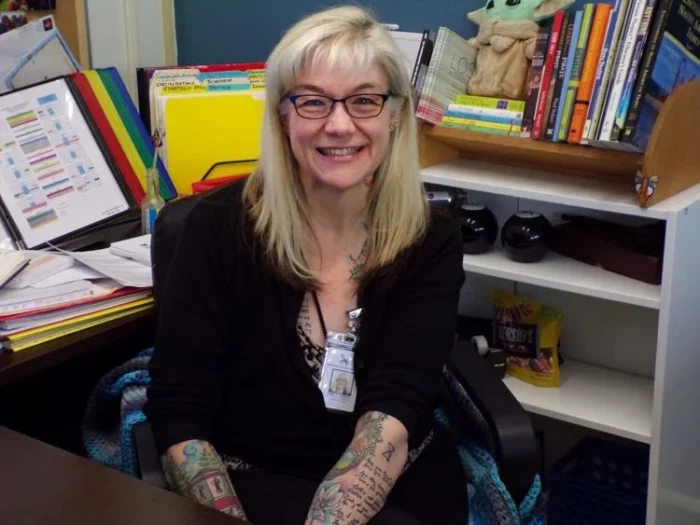
Dr. Kim Tyskiewicz (Tz or Dr. Tz) is the Academic Advisor for CLHS and FLEX High School students. She is located in Room 202 at CLHS in the blue modular building behind the school boardering the athletic parking lot, next to the new CTE building.
Start the Conversation
You do not need to know exactly what you want to do before meeting with the Academic Advisor. Bring your ideas, questions, interests, uncertainties, and even the possibilities that seem out of reach. Together, we can explore the options, identify the preparation each pathway requires, and create a plan that turns your goals into achievable next steps.
Explore your possibilities. Plan with purpose. Prepare for what comes next. Schedule an appointment with Dr. Tz (Kim Tyskiewicz) the Academic Advisor.
How Academic Advising Supports Students
Depending on a student’s grade level, interests, and goals, academic advising may include:
- Interest, strength, and career exploration;
- Personal Education Plan development;
- Four-year high school course planning;
- Graduation progress reviews;
- CTE pathway planning;
- College Now and dual-credit planning;
- Expanded Options applications;
- FLEX Diploma & Degree planning;
- College and training-program research;
- Transfer and degree-pathway planning;
- Financial-aid and scholarship information;
- Application and essay support;
- Résumé and interview preparation;
- Military, apprenticeship, and workforce exploration;
- Planning for graduate or professional school;
- Identification of prerequisite courses and credentials; and
- Transition planning for life after high school.
Students’ interests and goals may change as they learn more about themselves and the opportunities available to them. That is a normal and valuable part of planning. Academic advising helps students revise their plans without losing sight of graduation requirements or long-term goals.
Oregon’s Higher Education Coordinating Commission recognizes that education after high school includes everything from apprenticeships and career certificates to associate, bachelor’s, master’s, and doctoral degrees (Oregon HECC). We help students work backward from their long-term goals so they understand the courses, experiences, credentials, and decisions that may be required along the way.
Explore Your Options
Employment
Apprenticeships and Skilled TradesAPColleges and Universities
Explore Your Options
Employment
Some students are ready to enter the workforce after graduation. We help students prepare to search for employment, complete applications, build résumés, practice interviews, communicate professionally, and understand workplace expectations. Students may also explore internships, work-based learning, job shadowing, and employment connected to their CTE courses or personal interests. WorkSource Oregon offers career coaching, job listings, skills assessments, résumé and interview assistance, internships, on-the-job training, apprenticeships, and other employment resources.
Employment does not have to mean the end of education. Many employers provide workplace training, industry credentials, tuition assistance, or opportunities for advancement. A student’s plan may combine immediate employment with college, certification, or specialized training later.
Colleges and Universities
Students may begin at a community college, attend a four-year university, transfer from one institution to another, or combine multiple options. Academic advising helps students consider:
- Programs and majors;
- Admission requirements;
- High school prerequisites;
- Application timelines;
- College costs and financial aid;
- Scholarships;
- Campus size and location;
- Housing and transportation;
- Transfer agreements;
- Career outcomes; and
- Graduate or professional education required for a long-term career goal.
Students can explore Oregon’s community colleges, public universities, private colleges, career schools, transfer opportunities, and financial-aid resources through the state’s Access College and Training portal. The federal College Scorecard also provides information about college costs, completion rates, programs, and student outcomes.
Our goal is not simply to help students get into college. It is to help them select an affordable, appropriate pathway that moves them toward the degree, career, and future they want.
Apprenticeships and Skilled Trades
Registered apprenticeships combine paid, supervised employment with classroom instruction. Students can earn wages while learning a skilled occupation and progressing toward a recognized professional credential.
Apprenticeship opportunities may be available in construction, electrical work, plumbing, welding, manufacturing, transportation, health care, technology, utilities, and many other fields. Oregon’s apprenticeship system is administered through the Oregon Bureau of Labor and Industries.
Academic advising helps students explore apprenticeship requirements, connect high school courses and CTE experiences to a trade, prepare applications, identify required math or technical skills, and understand the difference between a registered apprenticeship, employer training, trade school, and other workforce programs.
Career Training and Certifications
Many careers require specialized training or an industry-recognized credential rather than—or in addition to—a traditional college degree. These opportunities may include:
- Community college certificate programs;
- Career and technical schools;
- Health care certifications;
- Commercial driving and transportation credentials;
- Technology and cybersecurity certifications;
- Emergency services training;
- Manufacturing credentials;
- Construction and equipment certifications;
- Business and industry credentials; and
- Other occupation-specific licenses or certificates.
Some programs can be completed in a few months, while others build directly into an associate or bachelor’s degree. We help students determine whether a program is properly approved, understand the total cost, compare employment outcomes, and identify whether the credential is recognized by employers or licensing agencies.
Begin College While Attending CLSD
Students may have several opportunities to earn college credit before graduating from high school. College Now, Expanded Options, and the FLEX Diploma & Degree Program are related opportunities, but they are not the same program.
College Now
College Now allows students to earn LBCC credit through qualifying courses taught at CLHS during the regular school day by LBCC-approved high school teachers. LBCC describes College Now as a free program through which students can earn college credit while still attending high school (LBCC College Now). College Now can help students:
- Earn high school and college credit simultaneously;
- Experience college-level expectations in a familiar environment;
- Complete college requirements early;
- Save time and money; and
- Begin building an official college record.
Available College Now courses may change based on staffing, instructor approval, course alignment, and the CLHS schedule.
Expanded Options
Expanded Options allows an eligible CLHS student to enroll directly in approved LBCC courses while remaining enrolled in Central Linn School District. Courses may be offered on an LBCC campus, online, or through another approved format.
Approved courses may count toward both high school graduation and college credit. Expanded Options is especially valuable for students who are ready for advanced coursework or need access to subjects that are not available at CLHS. Participation is governed by Oregon’s Expanded Options statutes and requires advance planning, eligibility review, District approval, college acceptance, and an educational learning plan.
Students interested in this opportunity should meet with the Academic Advisor well before the annual application deadline and review the EXPANDED OPTIONS PAGE for complete eligibility, credit, cost, and application information. LBCC application information is available through its Campus High School Programs.
FLEX Diploma & Degree Program
The FLEX Diploma & Degree Program provides a structured pathway for students who want to complete a CLSD high school diploma while also working toward an associate degree through LBCC. Students may blend:
- CLSD graduation requirements;
- Online or home-based coursework;
- In-person CLSD classes;
- LBCC college courses;
- Dual high school and college credit;
- Flexible scheduling; and
- Individual academic and career planning.
Students who begin the pathway with at least three successful years available and complete the required CLSD and LBCC coursework can earn both a CLSD high school diploma and an associate degree. Careful planning is essential because students must meet the requirements of both institutions, maintain appropriate academic progress, and complete courses in the correct sequence.
The program is intended for motivated students who are ready to begin college-level work and want a flexible, accelerated pathway. FLEX Diploma & Degree students remain CLSD students and retain access to District teachers, specialists, services, activities, athletics, and student supports.
How Academic Advising Supports Students
Depending on a student’s grade level, interests, and goals, academic advising may include:
- Interest, strength, and career exploration;
- Personal Education Plan development;
- Four-year high school course planning;
- Graduation progress reviews;
- CTE pathway planning;
- College Now and dual-credit planning;
- Expanded Options applications;
- FLEX Diploma & Degree planning;
- College and training-program research;
- Transfer and degree-pathway planning;
- Financial-aid and scholarship information;
- Application and essay support;
- Résumé and interview preparation;
- Military, apprenticeship, and workforce exploration;
- Planning for graduate or professional school;
- Identification of prerequisite courses and credentials; and
- Transition planning for life after high school.
Students’ interests and goals may change as they learn more about themselves and the opportunities available to them. That is a normal and valuable part of planning. Academic advising helps students revise their plans without losing sight of graduation requirements or long-term goals.
Military Service
Military service can offer technical training, leadership development, employment experience, educational benefits, travel, and a variety of long-term career opportunities. Students may explore:
- Enlistment in a military branch;
- Active-duty service;
- National Guard or Reserve service;
- Military service academies;
- ROTC programs;
- Officer commissioning pathways;
- Military occupational specialties;
- ASVAB preparation;
- Physical and eligibility requirements; and
- Education and training benefits.
The Academic Advisor can help students compare military pathways, identify questions to ask recruiters, understand how service may connect to college or career goals, and prepare academically for service academies, ROTC, technical training, or future education. Students and families should review current education-benefit information through official sources such as the U.S. Department of Education’s Military Education Benefits page.
Gap Year and Service
A gap year can be a meaningful part of a student’s plan when it has a clear purpose. Students may use that time for employment, national or community service, travel, internships, career exploration, skill development, or preparation for future education. Programs such as AmeriCorps allow participants to serve communities, develop employment and leadership skills, and explore possible career interests. Some service programs may also provide living allowances or education awards. Students considering a gap year should develop a written plan that addresses goals, costs, applications, housing, employment, college admission or deferment requirements, and what they intend to accomplish before taking the next step.