








Central Linn School District has a long tradition of serving students and families in rural Linn County and reflects the strong agricultural roots and community values of the region. For generations, local schools have served as gathering places for community events, celebrations, athletics, and educational opportunities that connect students and families across the district.
The district draws students from Halsey, Brownsville, Shedd, and neighboring rural communities and has evolved over time to meet the changing needs of students while maintaining the close relationships and sense of community that define rural education. Central Linn schools have long been recognized for providing students with opportunities to participate in academics, athletics, leadership, agriculture, fine arts, and career preparation programs.
As education has changed, Central Linn has continued to grow and adapt by expanding access to technology, college and career readiness opportunities, Career and Technical Education programs, and flexible learning options. The addition of Central Linn Online Academy and the FLEX Personalized Learning Program allows the district to serve students through multiple pathways while maintaining high expectations and strong support systems.
Today, Central Linn School District continues its tradition of preparing students for success beyond graduation while honoring the values of community, responsibility, perseverance, and service that have shaped the district for generations. The district remains committed to building on its history while preparing students for the opportunities and challenges of the future.
The story of Central Linn School District is, in many ways, the story of rural Linn County itself.
Long before there was a Central Linn School District, students attended small local schools scattered throughout farming communities such as Halsey, Brownsville, Shedd, Peoria, Oak Plain, Harmony, Lake Creek, Powell, Kirk, Union Point, and Courtney Creek. Many of these schools were one-room schoolhouses where a single teacher taught students of all ages and grade levels together. Education was deeply connected to community life, agriculture, and the values of hard work, service, and neighbor helping neighbor that continue to define Central Linn today.
Several of these local schools were established as early as 1855, only a few years after Oregon Territory was created and four years before Oregon became a state. Communities often built schools before roads, utilities, or many public buildings because education was viewed as essential to the future of the region and its families.
As transportation improved and communities grew, many of the smaller districts began consolidating with neighboring schools. Peoria joined Shedd in 1946. Harmony consolidated with Shedd and Halsey later that same year. Powell joined Halsey in 1946, followed by Kirk in 1948 and Lake Creek in 1951. Brownsville absorbed Union Point in 1948 and Courtney Creek in 1955 as rural education gradually shifted from isolated one-room schools to larger community schools that could provide broader educational opportunities to students.
The modern Central Linn School District officially came into existence on July 1, 1956, when the communities of Brownsville, Halsey, and Shedd joined together to create what became District 552C — Central Linn School District.
The consolidation reflected a shared belief that students would benefit from expanded academic offerings, extracurricular opportunities, and access to facilities that individual rural districts could no longer provide on their own.
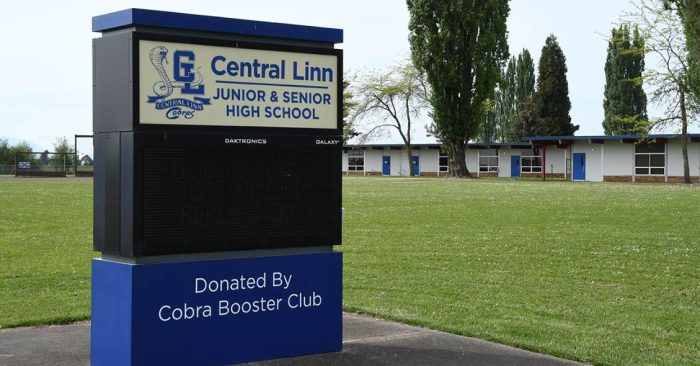
One of the district’s most significant milestones occurred in September 1958, when the new Central Linn High School opened east of Halsey.
For the first time, students from throughout the district attended a single junior and senior high school, creating traditions and rivalries that continue to shape the identity of the district today. The Halsey school building continued serving younger students, preserving the community connection that had existed for generations.
The Halsey school itself has an impressive history.
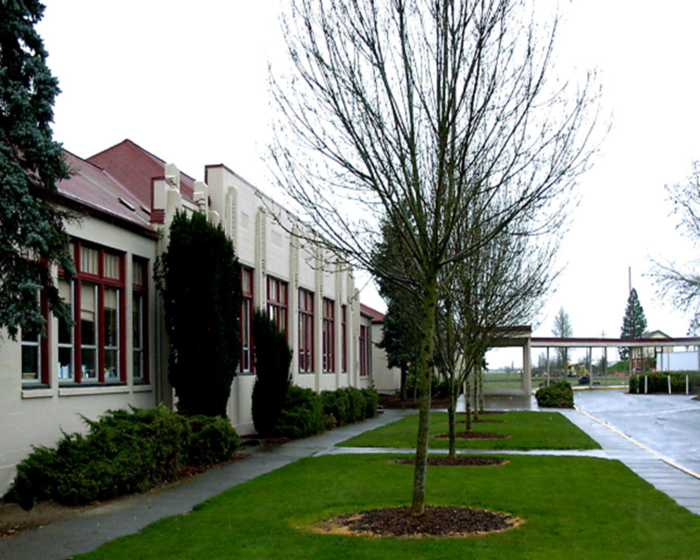
The original school building contained only four classrooms and four teachers. Additional rooms for high school students were added around 1920, followed by a basement, electricity, and a furnace in 1930. The original portion of what is now Central Linn Elementary School opened in 1936 to replace the older building and served both elementary and high school students until the opening of Central Linn High School in 1958.
In 1977, the former Halsey school building was remodeled and expanded to become the district’s middle school.
At the conclusion of the 1993-1994 school year, the elementary schools in Brownsville and Shedd closed, and Halsey became home to the district’s single elementary school serving students throughout Central Linn.
While those closures marked the end of an era for some communities, they also strengthened the district-wide identity that students and families share today.
Central Linn has always balanced small-town relationships with big opportunities. Agriculture programs and 4-H activities were central parts of school life for generations. Community celebrations often revolved around schools, and events such as Halsey’s annual School Fair brought together student exhibits, agricultural projects, parades, and athletic competitions. Beginning in 1929, local high school students even selected a king and queen to preside over the festivities, a reminder that schools have long served as the heart of community life in Central Linn.
Over the years, Central Linn students have built a proud tradition in academics, agriculture, music, drama, leadership, and athletics. Cobra teams have earned numerous state accomplishments, including multiple boys track and field state championships beginning in 1967 and continuing through the 2010s, while generations of students have represented the district through organizations such as FFA, music programs, leadership activities, and community service.
Today, Central Linn continues to honor its rural roots while embracing innovation and new opportunities for students.
The district now offers traditional in-person learning, the Central Linn Online Academy, the FLEX Personalized Learning Program, expanded Career and Technical Education opportunities, and innovative partnerships with colleges and industry leaders. While the methods of teaching and learning continue to evolve, the district’s mission remains remarkably similar to that of those first one-room schoolhouses more than 170 years ago: preparing young people to contribute to their communities and build meaningful lives of their own.