








The FLEX Diploma & Degree Program provides students with the opportunity to complete both a CLSD high school diploma and an associate degree through a carefully coordinated sequence of high school and community college courses.
Students in this pathway remain enrolled as CLSD students while also enrolling in approved courses through CLSD’s community college partner. Approved college courses may satisfy both high school graduation requirements and college-degree requirements, allowing students to earn high school and college credit from the same successfully completed course.
Oregon’s statewide dual-credit standards allow students in grades 9–12 to earn both high school and community college or university credit upon successful completion of an approved course (ORS 340.310). Oregon also directs community colleges to collaborate with interested school districts to provide dual-credit, two-plus-two and other accelerated college-credit programs (ORS 341.450).
FLEX Academic & Course Catalog
FLEX Program Administrator & Academic Advisor
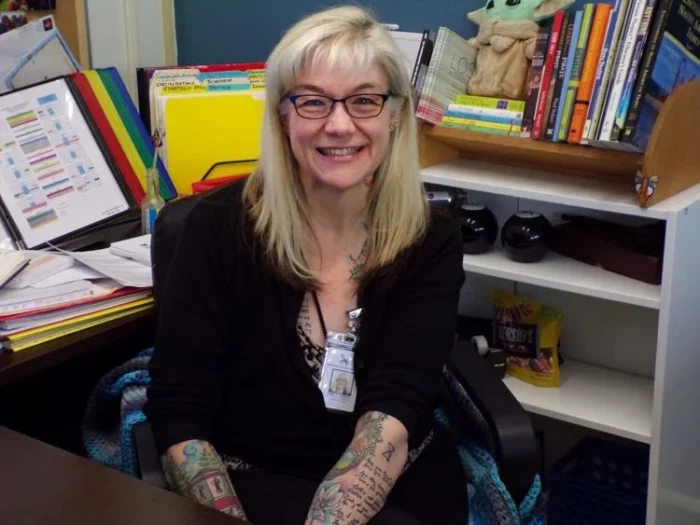
Dr. Kimberly Tyskiewicz
(Kim Tz)
Phone: 541-791-5315
A Coordinated Academic Plan
Each Diploma & Degree student receives an individualized academic plan showing:
- Remaining CLSD graduation requirements;
- The associate-degree requirements;
- Which college courses satisfy high school requirements;
- Which requirements must be completed separately;
- The planned course sequence for each term;
- College prerequisites and placement requirements;
- Progress benchmarks;
- Available academic supports; and
- The anticipated dates for high school graduation and associate-degree completion.
Oregon law recognizes postsecondary courses that may lead to high school completion, professional certification, an associate degree or a baccalaureate degree. Eligible courses may include academic, career and technical, and distance-education courses (ORS 340.005(4)).
When an approved college course is used for both high school and college credit, CLSD identifies the amount and type of high school credit before the student begins the course. Successful completion is recorded in the student’s CLSD education record and on the student’s community college transcript (ORS 340.040(5)–(8)).
The Completion Guarantee
A student who participates successfully in the FLEX Diploma & Degree Program for a minimum of three years, follows the prescribed course sequence and completes all required coursework will earn both:
- A Central Linn School District high school diploma; and
- An associate degree awarded by the partner community college.
This is a structured completion pathway, not simply an opportunity to take occasional college courses. CLSD coordinates the student’s high school and college requirements so that a student who successfully follows the approved three-year plan completes both credentials.
Successful participation means that the student:
- Enters the pathway with at least three program years available;
- Follows the approved Diploma & Degree course sequence;
- Meets applicable community college admission and placement requirements;
- Successfully completes all required high school and college courses;
- Maintains the academic progress required by the community college;
- Participates in advising and progress-review meetings;
- Meets course registration, attendance, assignment and withdrawal deadlines;
- Provides CLSD with access to required college enrollment, grade and transcript information; and
- Completes all CLSD diploma and community college associate-degree requirements.
Students do not earn both credentials merely by remaining enrolled for three calendar years. The guarantee applies when the student successfully completes the prescribed three-year program.
College Courses Are Real College Courses
Students and families should understand that these are actual college courses. The grades become part of the student’s permanent college transcript. College courses may move more quickly, require more independent work and follow different calendars, grading systems, attendance expectations and withdrawal deadlines than CLSD courses.
Failing, withdrawing from or not completing a college course may affect:
- High school credit;
- Progress toward graduation;
- Progress toward the associate degree;
- The student’s permanent college transcript;
- Future college academic standing;
- The student’s planned course sequence; and
- The student’s ability to complete both credentials within three years.
FLEX and community college advisors work with students to select appropriate courses, monitor progress and identify support before a student falls behind. Students must maintain satisfactory academic progress as defined by the participating community college.
Individualized Planning and Placement
Placement in FLEX is an individualized educational decision. The District reviews the student’s educational needs and interests, consults with the student and parent or guardian, and determines whether FLEX is an appropriate program for helping the student make progress toward district and state standards (OAR 581-022-2505(5)). A FLEX learning plan may identify:
- The student’s academic, graduation and postsecondary goals;
- Required courses and available electives;
- College courses and degree requirements, when applicable;
- The combination of home-based, online and in-person learning;
- Teacher and staff responsibilities;
- The student’s schedule and expected learning activities;
- The method and frequency of regular contact;
- How participation and academic progress will be documented;
- Required assessments;
- Accommodations, modifications and specialized services;
- The responsibilities of the student and family; and
- Criteria for reviewing or adjusting the placement.
The plan is reviewed as needed so that the program can respond to student progress, changing needs and new goals.
Curriculum, Standards, Assessment and Credit
FLEX instruction is part of CLSD’s planned K–12 instructional program. Courses and learning activities must be based on Oregon academic content standards and use district-approved curriculum, courses, instructional materials and learning platforms when they are available (OAR 581-022-2030).
FLEX students:
- Receive instruction connected to applicable state academic content standards;
- Participate in required district and state assessments;
- Complete approved learning activities that provide evidence of academic progress;
- Earn credit by meeting CLSD and Oregon requirements;
- May earn simultaneous high school and college credit through approved courses;
- May demonstrate proficiency through approved classroom work, supervised independent study, projects, career-related learning or other approved options; and
- Have evidence of academic progress maintained in their student education records.
These requirements are established in OAR 581-023-0008(3) and Oregon’s credit-options rule, OAR 581-022-2025.
Supervised independent study may be included as one component of a student’s educational plan, but it may not constitute the student’s entire educational program (OAR 581-023-0008(2)(k)). FLEX therefore combines independent work with appropriate teacher direction, online instruction, progress monitoring, conferences, group instruction, counseling, projects, college coursework or other accountable educational activities.
Participation, Attendance and Regular Contact
FLEX students must participate in the approved instructional activities identified in their learning plans. Because FLEX plans may use different combinations of online, home-based, in-person and college instruction, participation may be documented differently for different students.
Evidence of participation may include:
- Attending an in-person or virtual instructional session;
- Participating in a teacher or advisor conference;
- Submitting an assignment, assessment or project;
- Demonstrating progress in an approved online or college course;
- Participating in counseling, guidance or academic planning;
- Completing documented supervised work experience;
- Completing an approved community-based learning activity; or
- Participating in another district-approved accountable activity.
For students receiving online instruction, Oregon requires access to a licensed or registered teacher and “regular contact” with school personnel for attendance and progress monitoring (OAR 581-022-2320(7)(b)). The OAR does not impose a universal requirement that every FLEX student have contact with staff every day. The appropriate frequency and method of contact will be established through the student’s schedule, learning plan and applicable District procedures.
Some students may have scheduled daily activities or live sessions, while others may follow a different regular-contact schedule. Students are responsible for attending required appointments and responding to staff communications according to their approved plans.
For less-than-full-time alternative education programs, state reporting is based on documented instructional hours and the type and size of the instructional activity. Documented supervised work experience, supervised community service and supervised independent study may be counted when they are part of an approved instructional program designed to meet the student’s educational goals (OAR 581-023-0006(7)(b)).
Student and Family Responsibilities
Flexible learning provides meaningful choice, but it also requires communication, organization and follow-through. FLEX students and families are expected to:
- Participate in developing and reviewing the student’s learning plan;
- Maintain current contact information with CLSD;
- Understand the student’s schedule and program requirements;
- Participate in required regular contact with FLEX staff;
- Attend scheduled classes, meetings, assessments and support sessions;
- Follow applicable community college requirements and deadlines;
- Complete and submit approved learning activities;
- Provide accurate evidence of participation and progress;
- Authorize the sharing of necessary records between CLSD and the community college;
- Communicate promptly when the student encounters a barrier;
- Follow CLSD expectations for behavior, academic integrity and technology use;
- Care for and return District-issued devices, textbooks and materials; and
- Work with staff when the learning plan needs to be adjusted.
Families are not expected to replace licensed teachers. Family members may support routines and encourage progress, while CLSD staff retain responsibility for instruction, supervision, assessment and educational decision-making.
FLEX Students Are CLSD Students
Enrollment in FLEX does not remove a student’s public-school rights or protections. Public alternative education programs must comply with the state statutes, administrative rules and federal laws applicable to public schools (OAR 581-022-2505(3)(a)).
FLEX students retain access to applicable CLSD programs, services and protections, including:
- Special education and implementation of Individualized Education Programs;
- Section 504 accommodations;
- Talented and Gifted services;
- English learner services;
- School counseling and mental-health supports;
- Health services;
- McKinney-Vento and foster-care protections;
- Nondiscrimination protections;
- Student education-record protections;
- District complaint procedures; and
- Due-process protections.
Districts must provide special education programs for eligible resident students (OAR 581-022-2315), protect students from unlawful discrimination (OAR 581-021-0045) and provide the required rights and services for identified TAG students (OAR 581-022-2330).
FLEX students may participate in CLSD courses, services, activities and programs under the same applicable standards as other CLSD students. Grade-level eligibility, prerequisites, capacity, scheduling, safety requirements, student conduct expectations and activity-association rules may still apply.
Students taking community college courses must also follow the college’s applicable academic, conduct, registration and disability-access procedures. CLSD remains responsible for required special education and related services for eligible students participating in applicable postsecondary programs (ORS 340.070).
Progress Monitoring and Program Accountability
FLEX staff monitor student participation and academic progress and maintain appropriate evidence in the student’s education record. Oregon requires alternative education programs to document academic progress, provide standards-aligned instruction and support student participation in applicable district and state assessments (OAR 581-023-0008(3)).
CLSD must also include FLEX student information in required state reporting and evaluate its alternative education program at least annually (OAR 581-022-2505(3) and (9); ORS 336.655).
For Diploma & Degree students, FLEX staff also monitor:
- Progress toward CLSD graduation requirements;
- Progress toward the associate degree;
- College grades and satisfactory academic progress;
- Course prerequisites and sequencing;
- High school and college credit alignment; and
- Whether adjustments are needed to keep the student on the three-year completion plan.
Requesting Placement in FLEX
Families interested in FLEX should contact their student’s school counselor, school administrator, the FLEX coordinator or the CLSD District Office and request a FLEX placement review.
The process generally includes:
- A conversation about the student’s needs, interests, strengths and current educational experience.
- A review of academic progress, attendance, graduation requirements and applicable student-service plans.
- Discussion of the Diploma & Degree Program when the student is interested in college-level learning.
- Consultation with the student and parent or guardian.
- Consideration of available FLEX pathways and supports.
- A District determination regarding whether FLEX is an appropriate placement.
- Development of an approved learning plan, schedule and participation expectations.
- Orientation to FLEX courses, communication procedures, technology and student responsibilities.
Placement is not automatic upon submitting an inquiry. Oregon requires District approval and a determination that the alternative program appropriately serves the student within district and state academic standards (OAR 581-022-2505(5)(b)–(c)).
Participation in the Diploma & Degree Program also requires community college acceptance, appropriate academic placement and sufficient time to complete the three-year sequence.
For a student who resides outside CLSD, approval from both the resident district and CLSD may be required before alternative-program placement (ORS 336.635(1)(d)).